01 / Living plan workspace
Change the plan once. See the impact before the work changes.
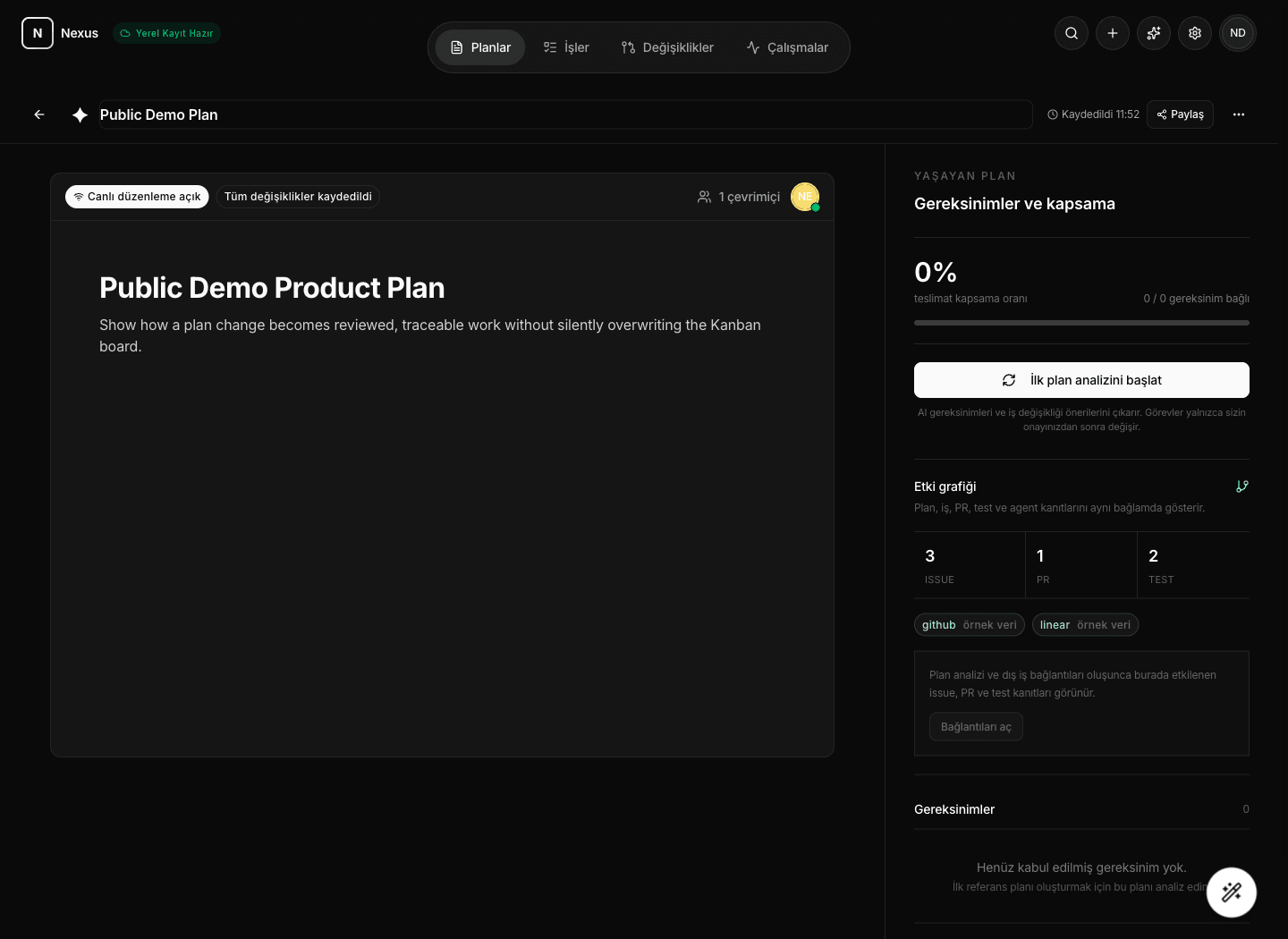
Decision flow
A plan change stays reviewable before it becomes delivery work.
Nexus is not another writing surface. Its product is the authority boundary between an accepted baseline and a proposed change.
- 01Accepted plan
- 02Proposed revision
- 03Impact analysis
- 04Human decision
- 05Audit trail
Signature flow / 01
The system finds the change. It never inherits authority.
Proposals remain visible, affected work stays traceable, and only the selected set is applied.
Requirement · Work · Test · Link
Plans change. The trace stays.
Nexus keeps plan and delivery in one change trace. It compares revisions, surfaces impact, and leaves the decision with a person.
- 01PLANbaseline.v2
- 02IMPACTimpact.review
- 03APPROVALhuman.approval
Authority stays human.
AI flags likely impact; execution waits for human approval.
This constraint shaped the interface: baseline and proposal are visually separate, impact is explicit, and approval is a real state rather than a decorative confirmation dialog.
From analysis to audit.
Temporal holds workflow state; PostgreSQL, Yjs, and audit events stay in one trace. The public demo uses quota-limited server access and honest unavailable states.
The result is intentionally narrow: one difficult workflow, implemented end to end and available to verify.
Product evidence
When the decision stays visible, the product becomes explainable.
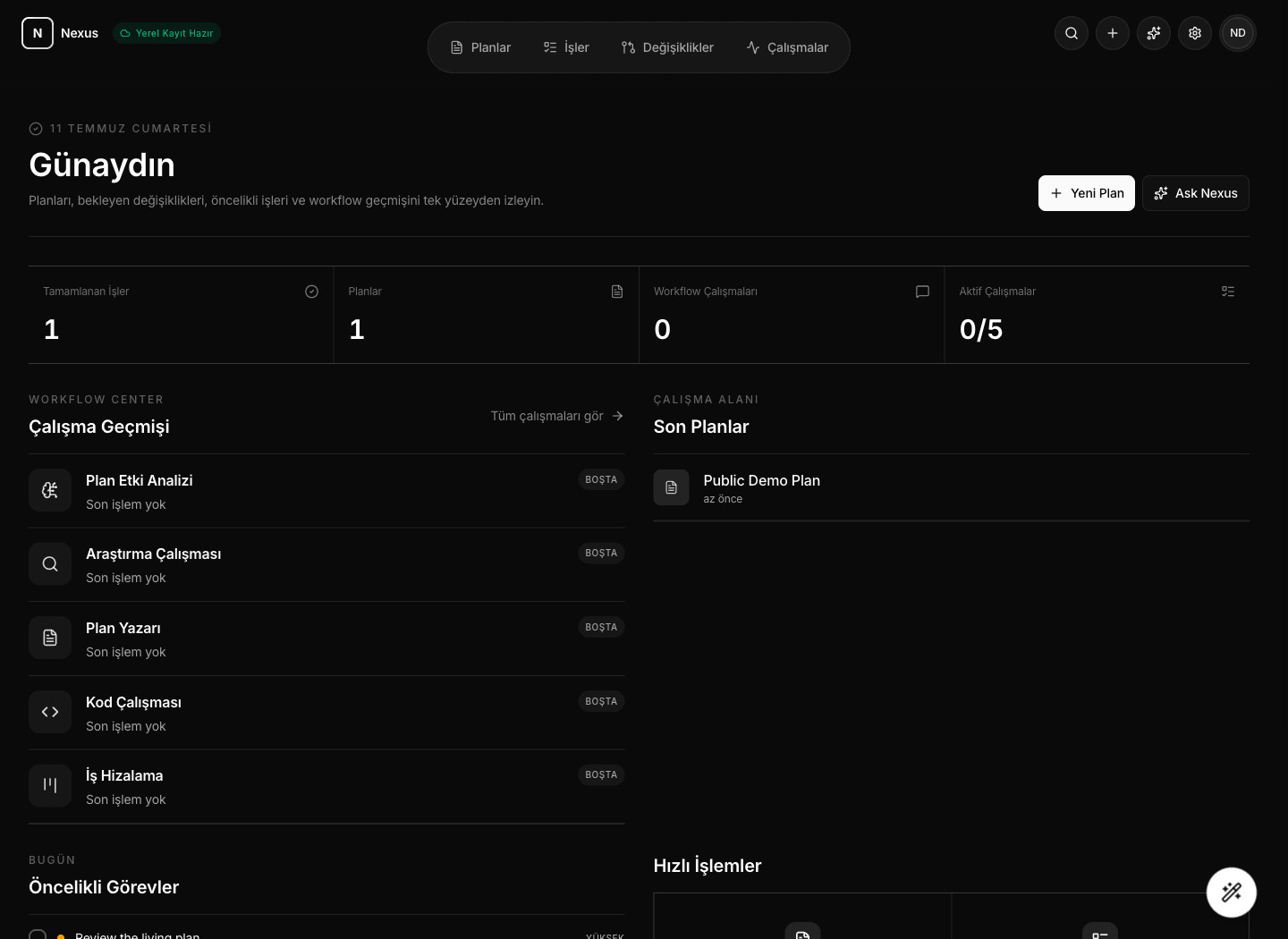
Plans, workflow state, and delivery priorities remain in one workspace.
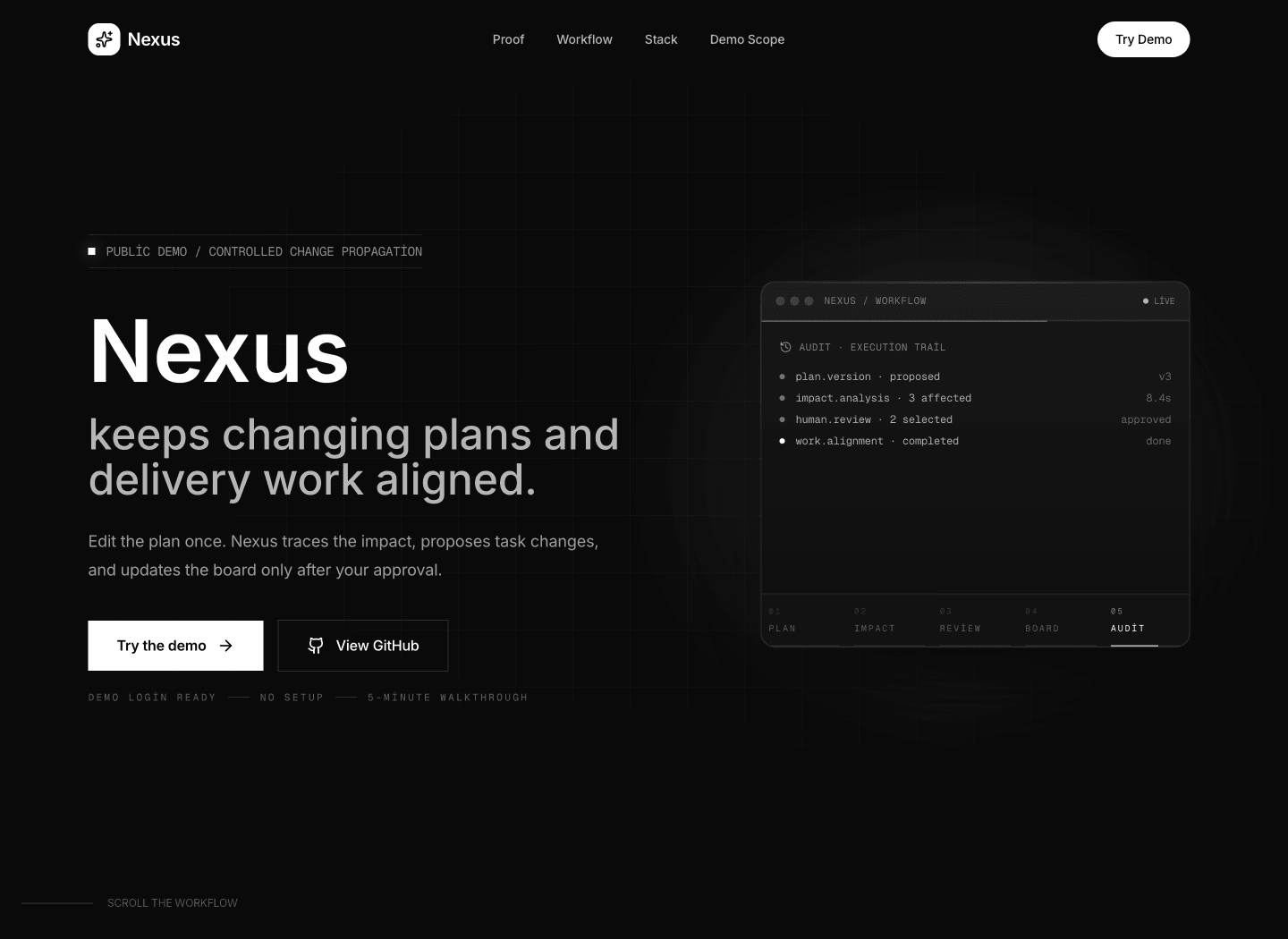
The public surface presents one difficult flow as a narrow, verifiable product demo.
System boundaries
A durable workflow and a visible decision are two halves of the same product.
- 01Next.js 16
- 02React 19
- 03TypeScript
- 04PostgreSQL + pgvector
- 05Drizzle
- 06Temporal
- 07Yjs
- 08Gemini
- 09Docker
- Engineering notes
- 31
- Unit test files
- 02
- End-to-end specs
- 01
- Approval gate
Boundary
Where the claim stops
Nexus is a focused portfolio demo, not a production-scale SaaS. The public workspace is isolated and deliberately limits external provider behavior.