04 / Learning surface / product
DevAtlas
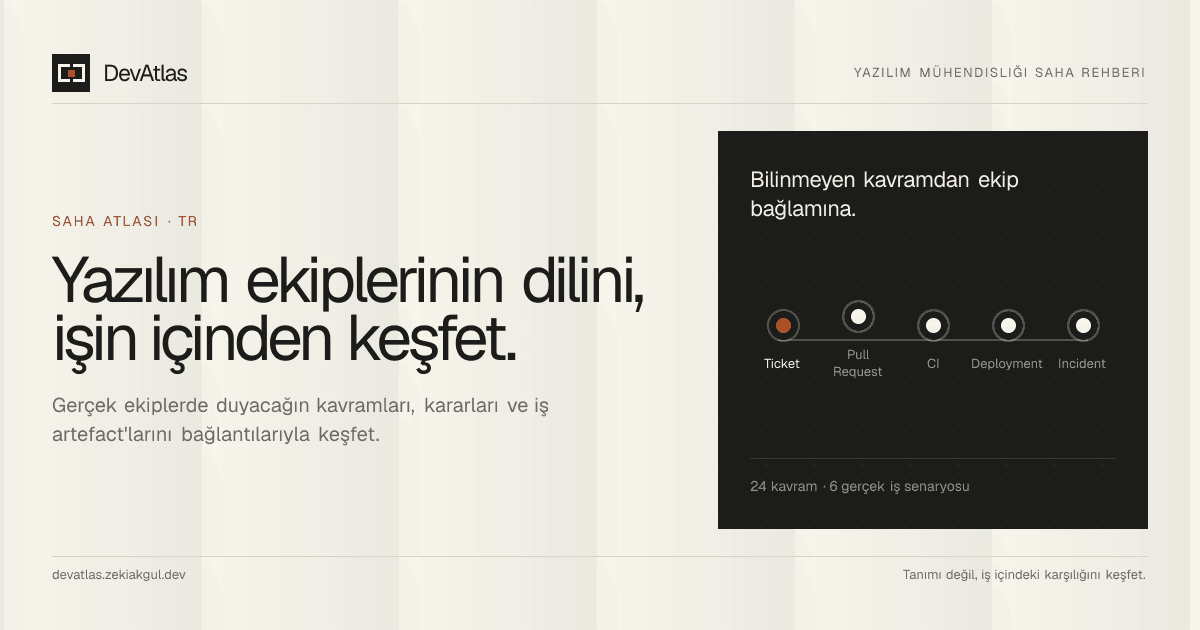
Discover the trace inside the work, not just the definition.
Context route / 04
A concept is not useful in isolation.
DevAtlas moves a concept from its definition to its place in a team, its decision context, and a real work scenario.
- 01Concept
- 02Context
- 03Relation
- 04Scenario
- 05Reflection
Concept atlas
Discover the trace inside the work, not just the definition.
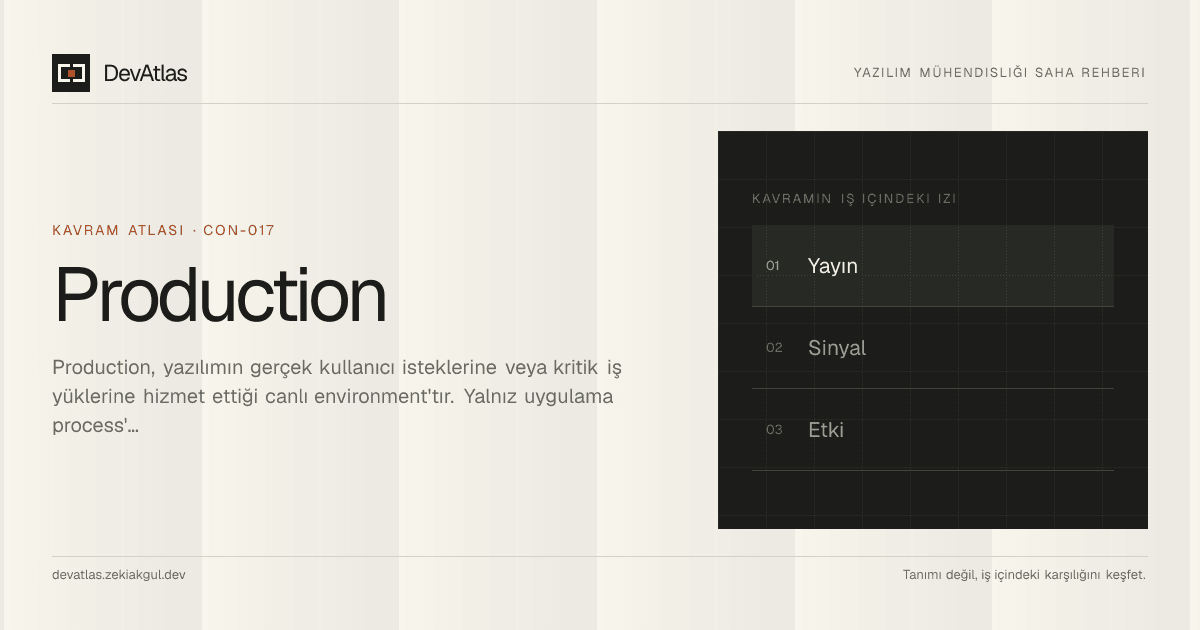
A concept such as Production is read alongside real team decisions and related surfaces.
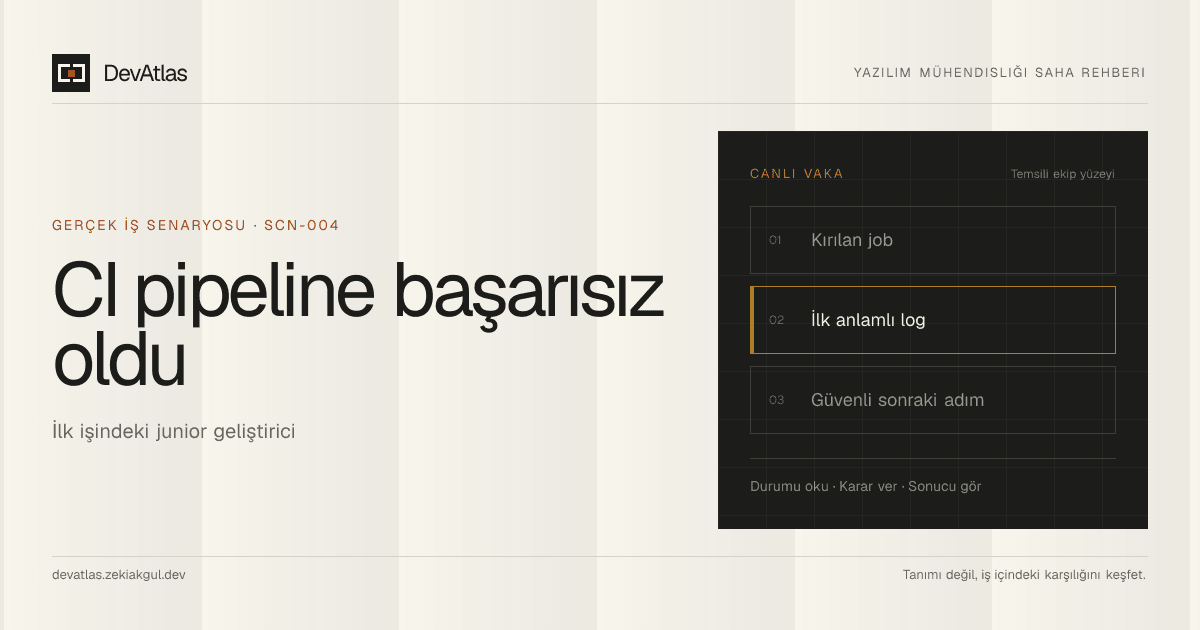
A broken CI pipeline scenario moves a junior developer from memorization to observation and decision order.
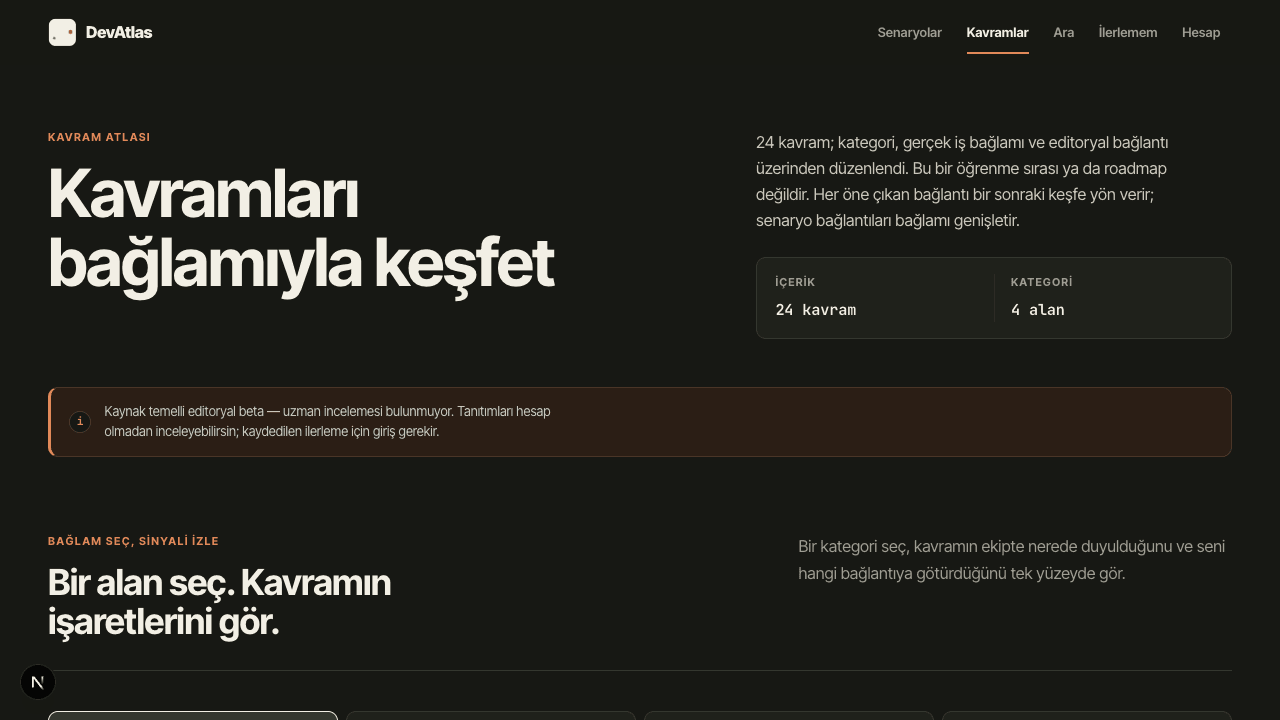
Discovery starts from the system’s vocabulary, not from a blank search box.
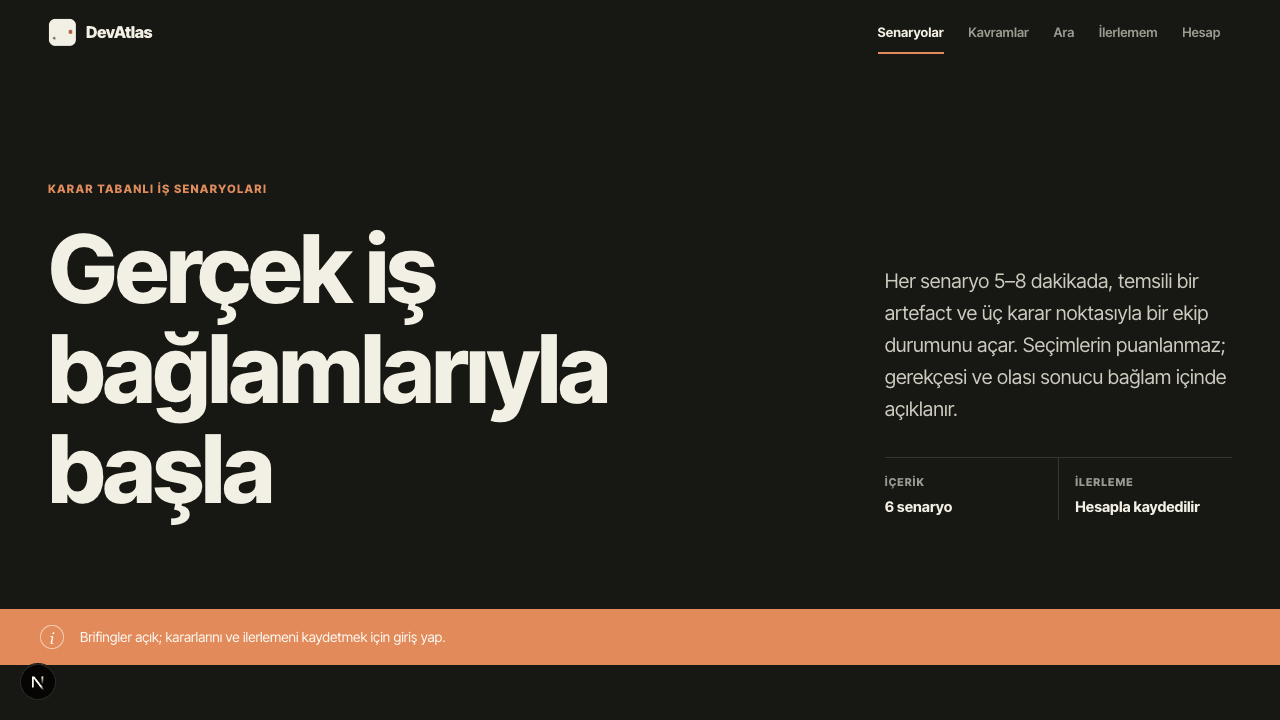
Scenarios turn a concept into a concrete next action.
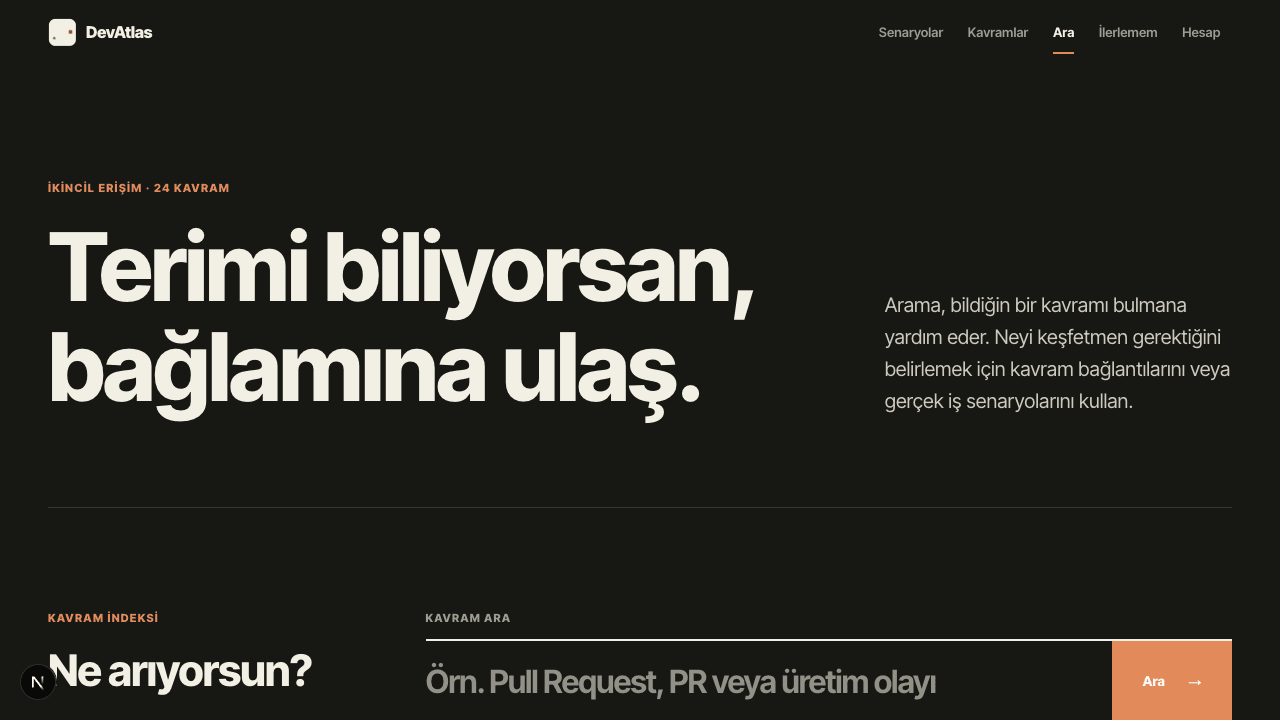
Search keeps the growing archive navigable without flattening its relationships.
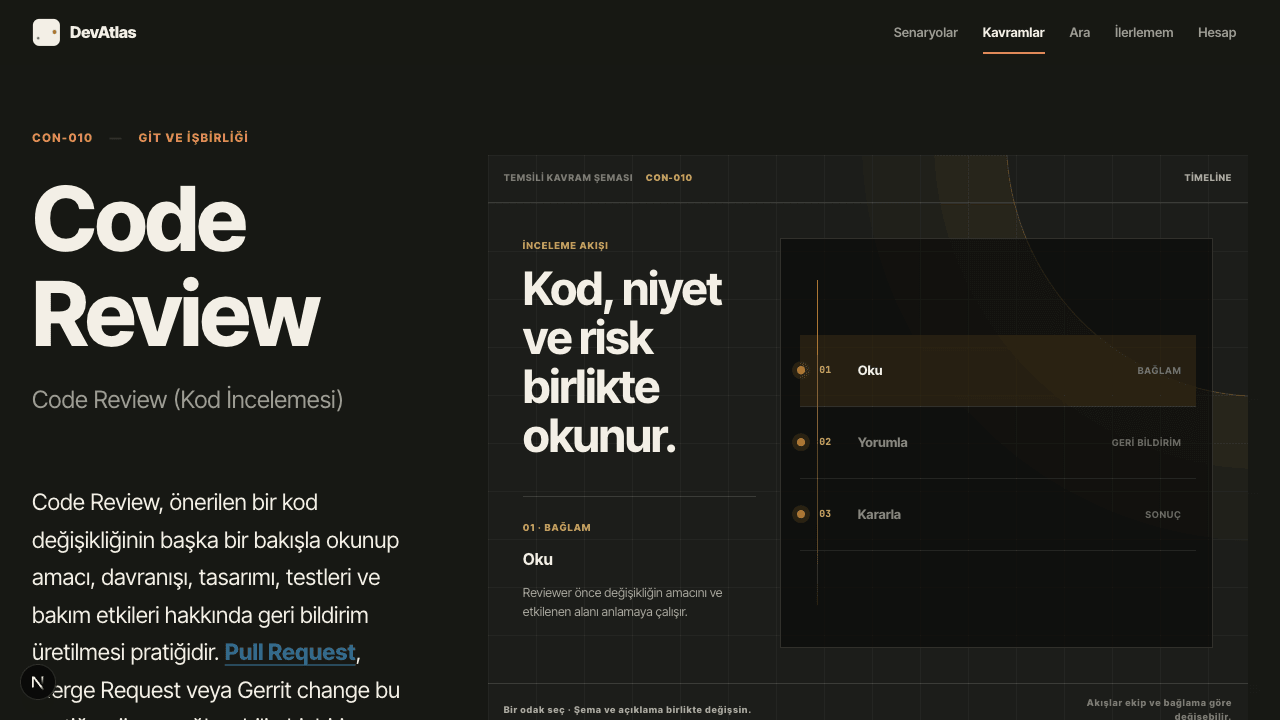
A code review is framed as a sequence of context, feedback, and decision.
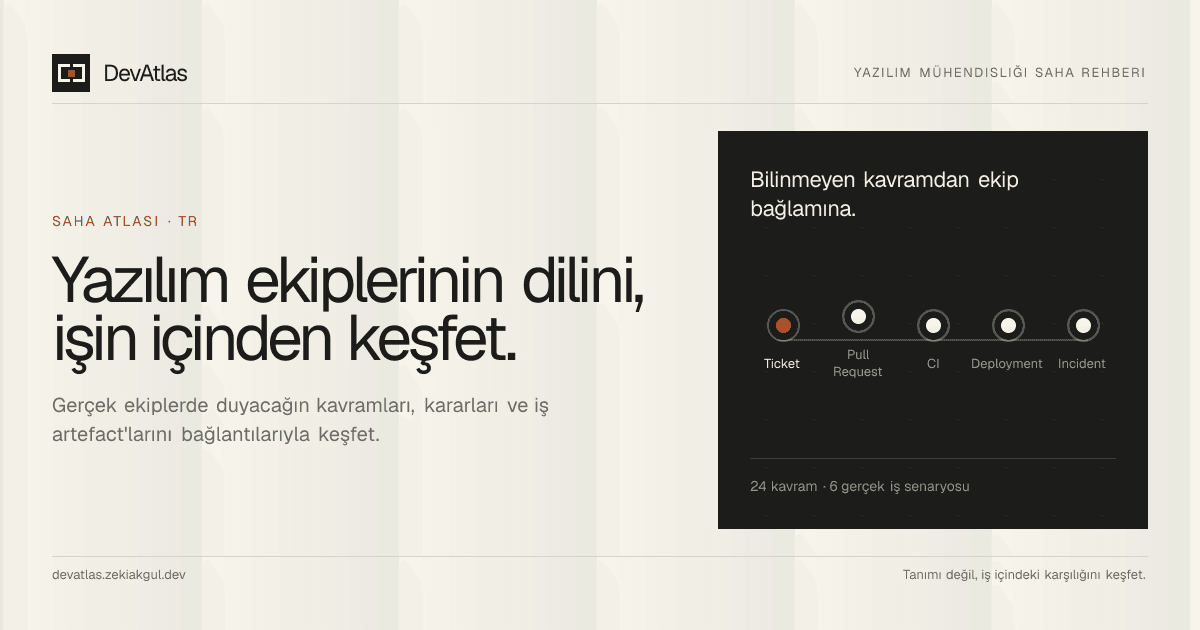
A learning surface that connects software teams’ language and decisions to the context of real work.
Discover the language of software teams from inside the work.
New developers can usually find a concept’s definition, but not the decision, risk, or delivery moment that gives it meaning inside a team. DevAtlas treats that gap as a product problem: connect concepts to the context of real work instead of presenting another content archive.
The learning flow moves from definition to decision.
Concept pages make related concepts and work context visible. Decision-based scenarios then move the reader through a situation, an observation, and a next step. The result is not only “what is this?” but also “what should I check when this appears in a team?”
The scope stays deliberately narrow.
The product does not claim to be a course, technical dictionary, roadmap, or interview-preparation tool. The public MVP keeps discovery, search, and reading open while treating account-based progress as a separate product layer.
System boundaries
The learning flow is built between concept, context, and decision.
- 01Next.js App Router
- 02React 19
- 03TypeScript
- 04Supabase Auth + Postgres/RLS
- 05Cloudflare Workers + OpenNext
- 06PostHog
- Scope evidence
- 24
- Public concepts
- 06
- Decision-based scenarios
- MVP
- Product stage
Boundary
Where the claim stops
DevAtlas is currently published as a Stage 2 MVP. The public surface contains 24 concepts and 6 decision-based scenarios; it is not positioned as a course, technical dictionary, or interview-preparation tool.